EV chargers for car parks: benefits of providing charging points
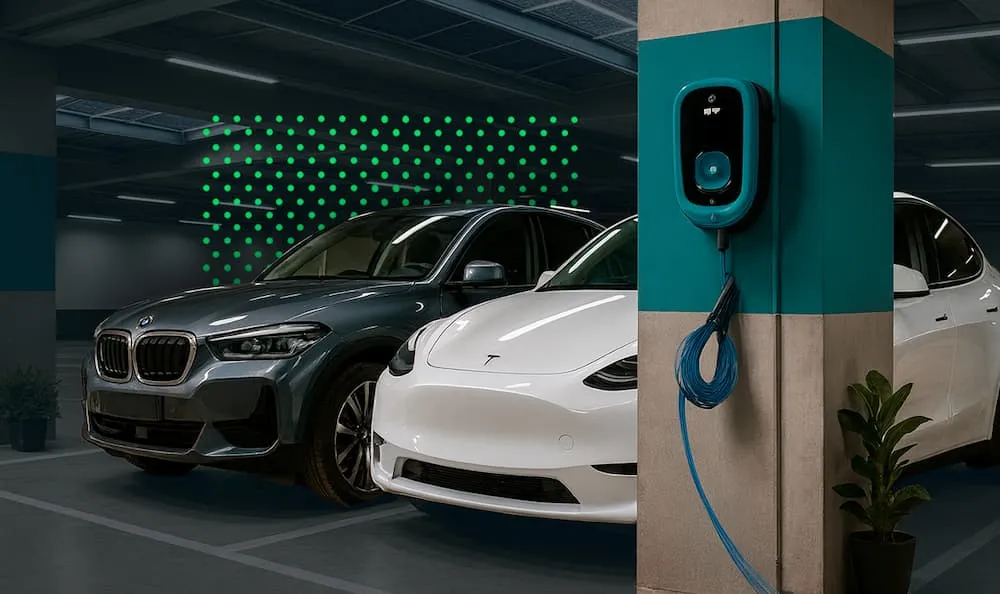
Installing EV chargers in a car park is an opportunity to expand services, attract new customers and adapt to electric mobility.
Car parks are no longer just places to leave vehicles. Drivers can also recharge while working, shopping or carrying out other activities.
EV charging may bring extra revenue and help a car park stand out. But operators need suitable equipment and a clear plan for daily management.
Here we look at the benefits of EV charging at car parks, planning considerations and digital management options.
Why install EV chargers in a car park?
Electric mobility is creating new parking requirements. More drivers want to park and charge during the same visit.
Public and private car parks have an advantage: vehicles often remain in place long enough to replenish energy.
This makes charging a useful additional service without drivers having to travel elsewhere.
Charging points can also help operators meet changing customer needs and prepare for future demand.
Five advantages of EV chargers in your car park
Charging points can offer commercial and operational benefits, especially when integrated with existing management systems.
1. Attract new customers and improve loyalty
EV charging availability can influence drivers' parking choices.
A customer may prefer a facility where they can charge while working or shopping rather than visit a charging station afterwards.
It may encourage repeat visits when prices, access and charger availability meet customer needs.
2. Generate additional revenue from each stay
Charging creates a potential revenue stream without expanding the number of parking spaces.
Operators can offer it as a paid service with conditions adapted to the facility.
At some sites, chargers may also attract customers who want both parking and charging.
However, chargers do not guarantee more profit. Review energy costs, installation, maintenance and how often they are used.
3. Stand out from other car parks
Available services shape how customers perceive a facility.
Charging while parked is convenient and helps position a car park as ready for new mobility needs.
This can be especially useful in shopping centres, hotels, hospitals, offices and urban facilities.
4. Improve customer experience
Integrated charging and parking services make the experience simpler.
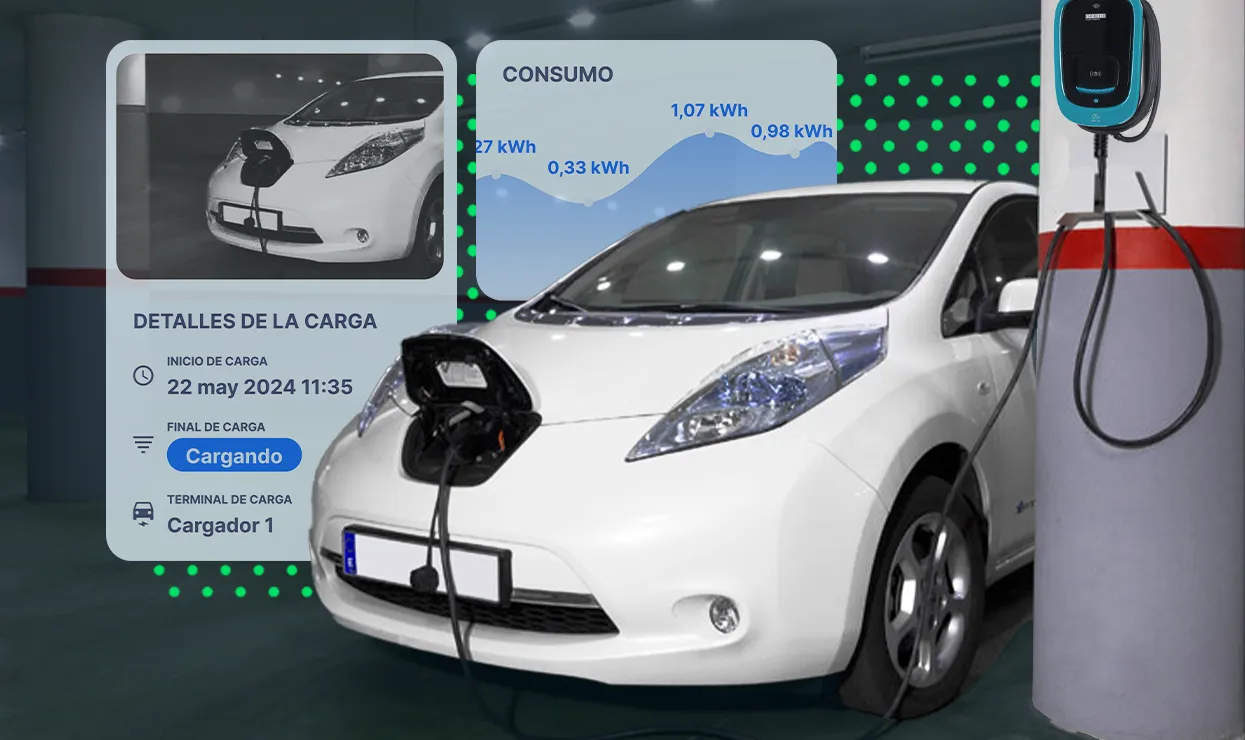
Depending on technology and configuration, drivers may start sessions on their phones, identify themselves with credentials and review transactions through digital tools.
Payment integration can also simplify administration of both services.
The goal is to make charging part of the normal parking experience rather than a complicated separate procedure.
5. Prepare for electric mobility growth
Chargers can be added gradually as demand increases.
Connected equipment and power management systems help distribute available electrical capacity.
This helps avoid oversized initial investments and allows operators to plan expansion.
How to integrate EV chargers with parking management
Charging equipment does not need to operate independently.
Integration connects charging sessions with users, payments and monitoring tools.
User identification and session activation
Depending on the charger, sessions may be activated with RFID cards, apps or websites.
Car parks using number plate recognition can also consider linking vehicles and parking stays to charging.
Number plate reading is not required for charging; it is an optional integration.
Paying for parking and charging
Connected systems can integrate charging fees with parking payment channels.
For instance, a customer may identify a stay on their phone and purchase charging through a compatible platform.
Where supported, both services can be administered together.
This helps financial monitoring and reduces reliance on completely separate applications.
Remote supervision and power management
Running several chargers means monitoring utilisation and available power.
Equipment using protocols such as OCPP can connect with compatible platforms for monitoring.
Dynamic power management allocates available energy across chargers and helps prevent planned electrical limits being exceeded.
This is especially relevant where operators expect to expand capacity gradually.
Which EV charger does a car park need?
The choice largely depends on average parking duration and available electrical power.
Alternating current (AC) charging can suit facilities where users park for several hours.
Where stays are shorter and faster charging is needed, other power levels and technologies may be more suitable.
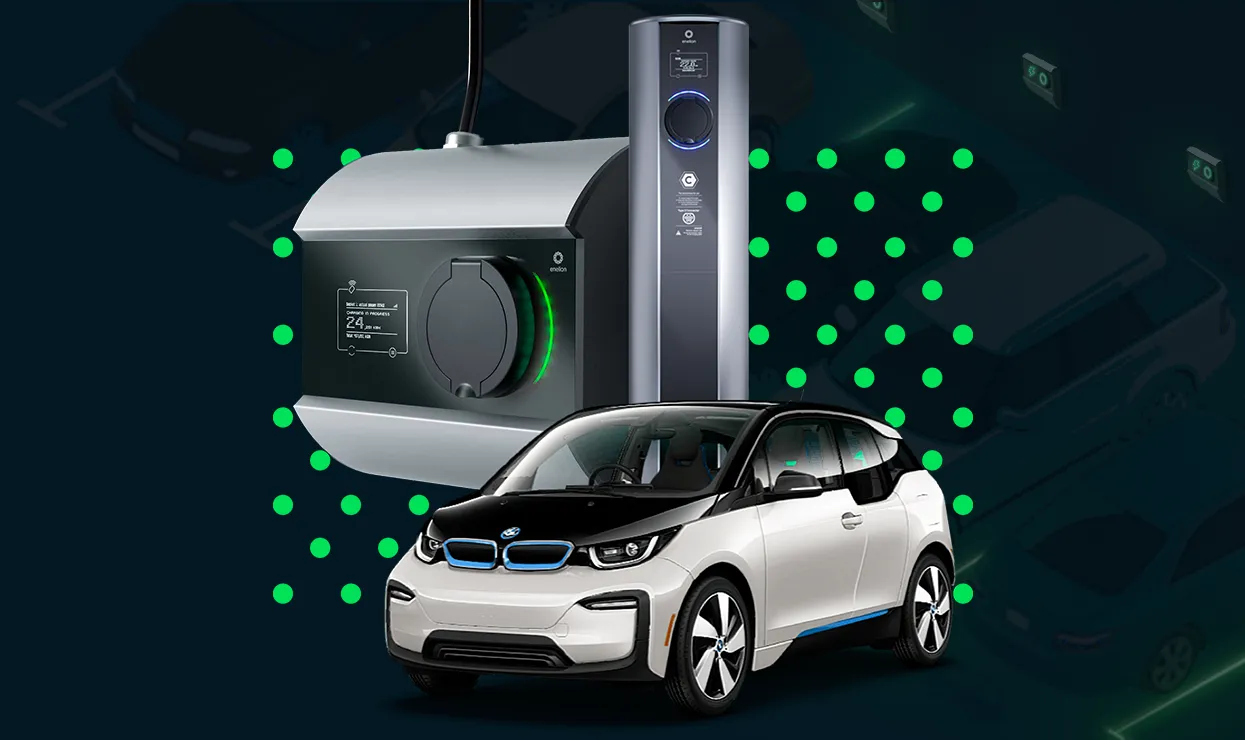
For example, the i+d3 VE SRP22 charging point offers AC charging up to 22 kW, activation through RFID or a website, OCPP communication and power modulation.
Remember that a maximum rating of 22 kW does not mean every vehicle can charge at that speed. Actual power also depends on the vehicle and electrical installation.
Before selecting equipment, assess stay durations, available power, users' needs and future growth.
Are EV chargers mandatory in car parks?
Spain has minimum charging infrastructure requirements for certain facilities.
Article 4 of Royal Decree-Law 29/2021 established that certain existing car parks with more than 20 spaces had to provide charging points before 1 January 2023.
As a general rule, for car parks within its scope, the requirements include:
- One charging station for every 40 spaces or part thereof, up to 1,000 spaces.
- One additional station for every 100 spaces or part thereof above the first 1,000.
More demanding conditions apply to certain Spanish central government buildings, and specific exceptions exist for protected properties.
New buildings and car parks undergoing certain refurbishments may have different requirements.
It should therefore not be assumed that every car park with more than 20 spaces has identical obligations.
Installations must also comply with applicable electrical and safety requirements, including ITC-BT-52.
For more information, read our article about EV charger regulations for car parks.
How to determine whether installing chargers is profitable
Before investing, calculate expected costs and forecast charger utilisation.
Costs to consider
Budgets may include:
- Charging equipment and accessories.
- Electrical installation, protection devices and cabling.
- Possible power upgrades or infrastructure modifications.
- Integration with management and payment platforms.
- Energy, communications and maintenance.
Civil works depend on the layout and condition of the existing electrical infrastructure.
Indicators to assess performance
After launch, monitor:
- Charging sessions: number of uses per charging point.
- Energy supplied: kWh delivered.
- Charging revenue: income from the service.
- Energy and operating costs: expenses associated with operation.
- Equipment availability: time chargers remain operational.
- Charging bay occupancy: actual use of reserved spaces.
These measures show whether infrastructure meets demand and when additional chargers may be justified.
Frequently asked questions about EV chargers in car parks
Is installing an EV charger profitable?
It can be where demand is sufficient and costs are managed effectively. Returns depend on utilisation, prices, electricity costs and upfront investment.
Must contracted electrical capacity be increased?
Not always. It depends on available power and the number of chargers. Dynamic management can distribute energy, but the installation must be assessed first.
Can parking and charging be paid together?
Yes, where charging, identification and payment systems have a compatible integration. Specific operation depends on the technology.
Can chargers be added to an existing car park?
Yes. Many existing facilities can install chargers after checking electrical infrastructure, available space and installation requirements.
Make EV charging another service at your car park
EV chargers offer opportunities to expand services, serve new customers and develop additional revenue streams.
The greatest value comes from combining suitable infrastructure with effective energy, payment and customer-experience management.
At i+d3 we offer EV charging points that can be connected to parking operations and managed digitally, depending on the project.
Want to introduce EV charging? Explore our parking equipment and services to find the best setup for your facility.