EV charging regulations for car parks: obligations and requirements
In Spain, several rules govern EV chargers in car parks. They define when chargers are required, how many to install and which technical standards apply. Requirements depend on the type of car park, its size and whether it is new or existing.
For example, certain existing non-residential car parks with more than 20 spaces have had to provide charging stations since 2023. Residential garages and newly constructed buildings face different requirements.
Knowing which rules apply helps operators plan electrical work and meet legal requirements.
Are EV chargers mandatory in car parks?
Yes, in some cases. Spanish legislation requires charging equipment or prepared electrical infrastructure for certain facilities, but the same rules do not apply everywhere.
The main requirements depend on facility type:
| Car park type | Main regulation and requirements |
|---|---|
| Existing non-residential car parks with more than 20 spaces | Minimum charging stations under Royal Decree-Law 29/2021 |
| New buildings or buildings undergoing certain works | Infrastructure and charging requirements under CTE DB HE 6 |
| New standalone car parks or facilities undergoing major renovation | Provisions of Royal Decree 1053/2014 and amendments |
| Shared residential garages | Individual installation provisions under the Horizontal Property Law and electrical regulations |
| Publicly accessible charging points | Additional requirements for service provision, information and terms of use |
All facilities must also comply with applicable technical and safety requirements.
How many EV chargers must a car park provide?
Article 4 of Royal Decree-Law 29/2021 sets minimum charger numbers for certain existing facilities.
The deadline was before 1 January 2023. The rule covers certain non-residential buildings and existing standalone car parks with more than 20 spaces.
Minimum equipment in existing car parks
As a general rule, facilities within the regulation's scope must provide:
- One charging station for every 40 spaces or part thereof, up to 1,000 spaces.
- One additional station for every 100 spaces or part thereof above the first 1,000.
For example, applying the general rule, an existing non-residential car park with 100 spaces needs at least three charging stations.
Higher requirements apply to certain buildings owned by Spain's General State Administration and associated bodies: one station per 20 spaces or part thereof up to 500, and an additional station for every 100 spaces or part thereof beyond that limit.
There are also specific exemptions for certain officially protected buildings of historical or architectural value.
Required charger numbers must therefore be calculated from the type of facility and applicable rules, not space numbers alone.
Charging rules for new or renovated car parks
Section DB HE 6 of Spain's Technical Building Code (CTE) sets charging infrastructure requirements for new buildings and certain works on existing buildings.
Unlike rules for some existing facilities, it also requires preparations for future charging infrastructure.
Non-residential buildings
Where CTE DB HE 6 applies, buildings other than private residential buildings must generally have:
- Cable conduit systems prepared to supply at least 20% of parking spaces in the future.
- One charging station for every 40 spaces or part thereof.
Additional requirements apply to certain central government buildings and accessible parking spaces.
Private residential buildings
Residential buildings covered by CTE DB HE 6 must have cable conduit systems capable of supporting future charging for 100% of spaces.
This does not mean an individual charger must be installed at every space immediately. It means providing the infrastructure for future installation.
What happens when a car park is renovated?
Not every renovation triggers identical obligations.
The CTE covers specific situations including certain changes of use, extensions, thermal envelope renovations and significant electrical installation works.
Before undertaking work, assess whether its scope triggers charging infrastructure upgrades.
See Royal Decree 450/2022, which introduced HE 6 into the Technical Building Code.
What rules apply to chargers in residential garages?
Requirements for shared residential garages depend on whether charging is for one parking space or part of a collective installation.
Article 17.5 of the Horizontal Property Law states that installing a private charging point at an individual garage space requires prior notification to the owners' association.
In this case, installation and electricity costs are paid by the individuals concerned.
General approval from the owners' meeting is therefore not required for this specific situation.
Collective infrastructure or work outside that provision may require additional legal and technical procedures.
Every installation must meet electrical safety standards and the building's particular requirements.
Technical requirements: what does ITC-BT-52 specify?
Regulations govern both $1 and the design and use of electrical installations.
ITC-BT-52, approved under Royal Decree 1053/2014, establishes technical requirements for electric vehicle charging infrastructure.
These address:
- Electrical supply and connection arrangements.
- Protection against overcurrent, overvoltage and electric shock.
- Equipment installation and cable routing.
- Safety requirements in indoor and outdoor car parks.
- Conditions for connecting and using charging points.
Compliance requires assessing electrical infrastructure, selecting suitable equipment and completing the necessary technical and administrative procedures.
For multiple chargers, available power and coordinated demand management should also be examined.
See Royal Decree 1053/2014 and ITC-BT-52.
What obligations apply to publicly accessible charging points?
Car parks providing EV charging to drivers must also consider rules governing service provision.
Royal Decree 184/2022 establishes conditions for publicly accessible energy charging services, including charging offered in car parks open to users.
It covers service conditions, operator rights and obligations, and information supplied to drivers.
The EU's Alternative Fuels Infrastructure Regulation (EU) 2023/1804, known as AFIR, also introduces requirements for ad hoc charging, payment methods and price transparency at publicly accessible infrastructure, subject to the characteristics and installation dates of charging points.
Operators must distinguish between electrical installation compliance and obligations arising from the charging service offered to customers.
Private charging points do not necessarily have the same obligations as publicly accessible ones.
What should operators check before installing EV chargers?
Five areas require attention:
1. Legal obligations. Identify car park use, capacity and the rules applying to existing or planned infrastructure.
2. Available electrical power. Determine whether the installation can support charging loads and what modifications may be necessary.
3. Safety requirements. Review protections, cable routes, connections and other technical standards.
4. Accessibility and use. Decide where charging bays will be located and how customers will use them.
5. Service management. Define session activation, payments and monitoring.
This review helps avoid later changes arising from incomplete initial planning.
Frequently asked questions about EV charging regulations
Are chargers compulsory in car parks with over 20 spaces?
Certain existing non-residential car parks with more than 20 spaces fall under Royal Decree-Law 29/2021. Requirements depend on building use and exceptions. They should not automatically be applied to all residential garages.
How many chargers does a 100-space car park need?
Under the general rule in Article 4 of Royal Decree-Law 29/2021, an existing non-residential car park with 100 spaces needs at least three charging stations. Different provisions may apply elsewhere.
Must every garage space have an EV charger?
No. In certain new or renovated residential buildings, regulations require cable conduit preparation for future charging at 100% of spaces, not individual chargers at every space from the outset.
Is owners' association permission required for a charger?
For private charging at an individual garage space, the Horizontal Property Law requires prior notification. Collective installations may be subject to other procedures.
Which safety rules must EV chargers meet?
Installations must comply with the Low Voltage Electrical Regulations and applicable provisions of ITC-BT-52, alongside other relevant technical requirements.
Adapting charging infrastructure to your car park
Complying with EV charging regulations means identifying applicable obligations, assessing infrastructure and selecting equipment appropriate to the service.
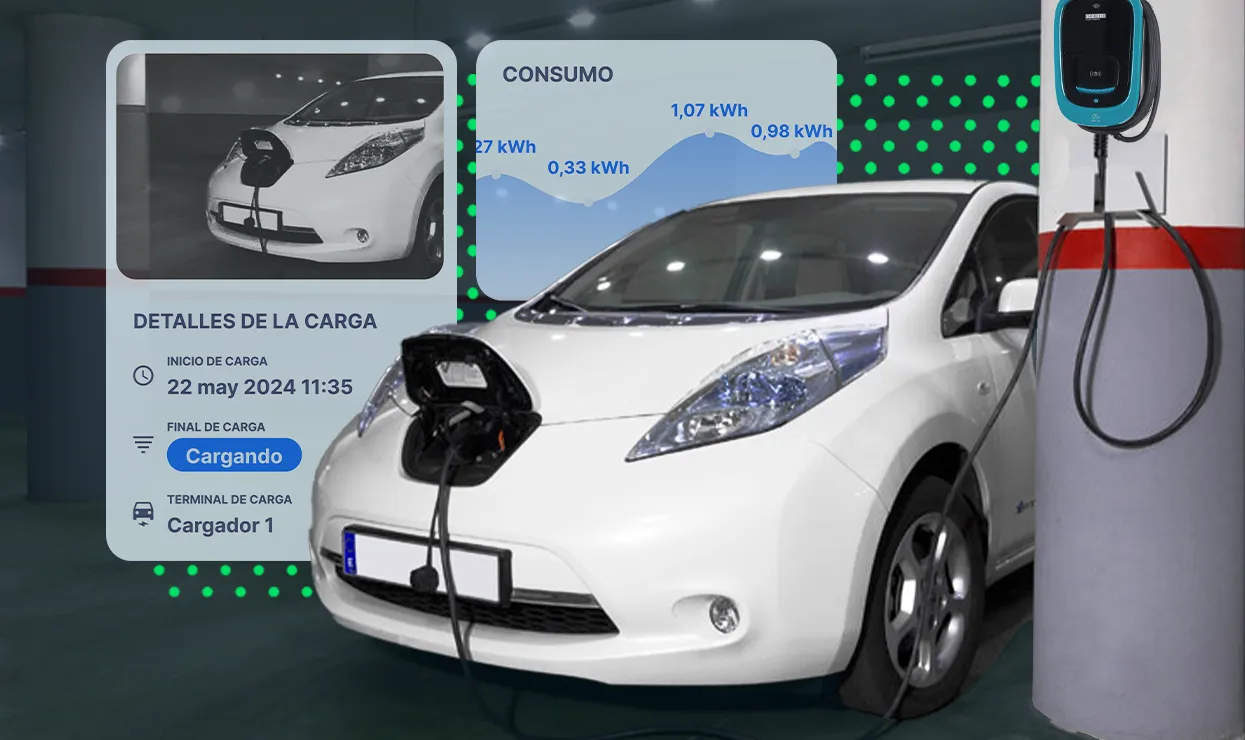
Beyond minimum legal requirements, connecting charging to parking management can support session activation, payment and monitoring.
At i+d3, we offer charging solutions that integrate into everyday car park operations.
Explore our EV charging point and the ways it can connect to parking management systems.