


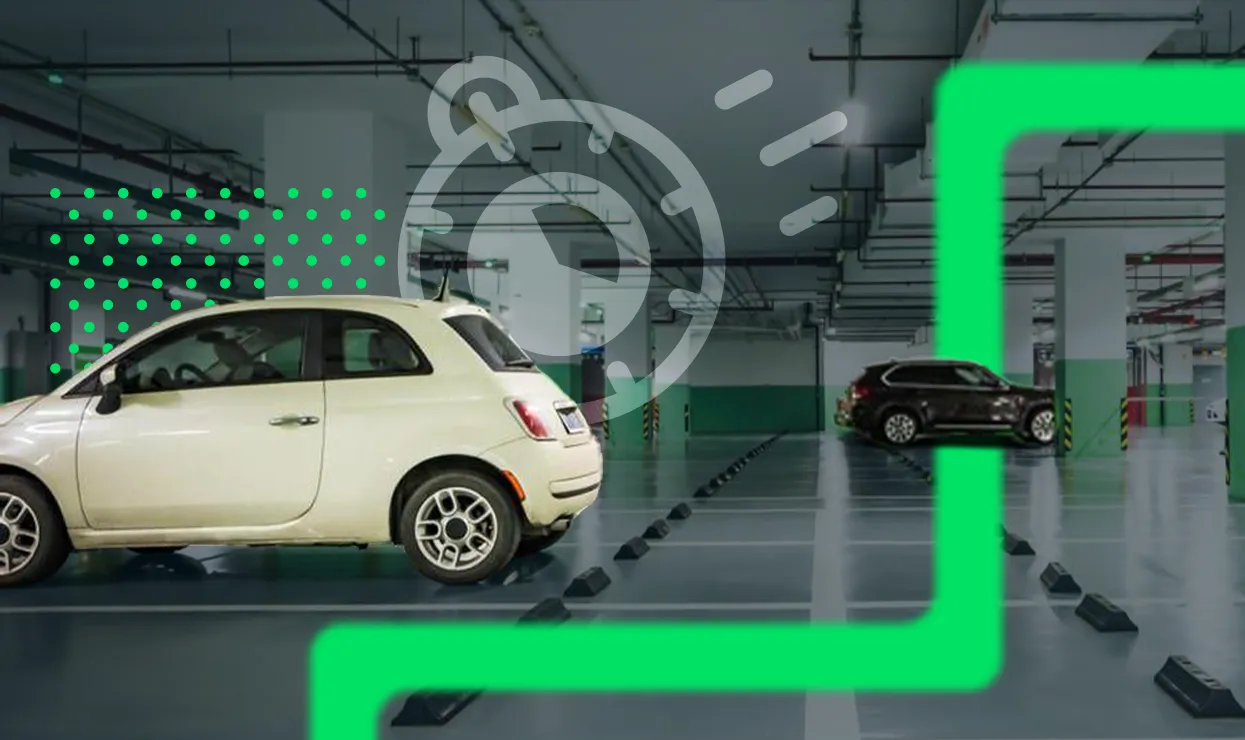
How to reduce queues and waiting times at a car park
Reducing waiting times in a car park means identifying where congestion occurs and improving the flow of vehicles at entrances, exits, payment points and internal roads. A lack of spaces is not always the cause. Slow access, technical problems and busy periods can also create queues.
Finding these bottlenecks helps operators use resources better. They can improve traffic flow without replacing every system.
Here are the main causes and ways to reduce delays.
Why do car park queues form?
Queues occur when vehicles arrive faster than a facility can process them.
This can happen even at automated sites, especially during peak periods.
Common causes include:
- Demand peaks: large numbers of arrivals or departures in a short period, such as after an event.
- Slow access: identification, validation or barrier operations that delay vehicles.
- Operational incidents: ticket, number plate, reservation or payment problems that block a lane.
- Payment congestion: many customers paying before returning to their vehicles.
- Slow internal circulation: drivers searching across several areas for available spaces.
Finding the cause matters. The best solution depends on where the queue starts.
Where do the longest waiting times occur?
Car park entrances and exits
Access lanes are particularly vulnerable to vehicle build-ups.
When many drivers arrive at once, even short delays at barriers or readers can create queues.
For instance, an unrecognised number plate or invalid reservation can block the vehicles behind.
Review access configuration, identification methods and support procedures to reduce these problems.
Our guide to parking access incidents explores common failures and prevention.
Payment machines and payment points
Payments can create queues when many customers try to pay in a short period.
This frequently occurs after performances or during shopping-centre peak hours.
Queues may depend on machine numbers, payment methods, transaction duration and payment failures.
If a driver reaches the exit without completing payment, another queue can develop in the lane.
Internal roads and searching for spaces
Not every delay happens at a barrier or machine.
At large car parks, drivers may spend time driving across several floors looking for available spaces.
Poor signs and limited space information can make drivers travel further and increase traffic.
Improving internal circulation is therefore part of reducing waiting times.
Five ways to reduce waiting times in a car park
1. Identify peak periods
Start by finding out when congestion happens.
Compare entries and exits throughout the day. Look for busy periods on weekdays, weekends and event days.
Access records do not necessarily show how long drivers wait. Direct queue measurements may be needed.
This information helps target improvements where they are actually required.
2. Speed up entry and exit identification
Reducing identification time can increase lane capacity.
Options include tickets, number plate recognition, QR codes and other credentials, depending on the site.
For example, a correctly recognised, pre-registered number plate can eliminate certain manual steps.
No method prevents all errors, however. Alternative identification and rapid incident resolution procedures are important.
The priority is to eliminate unnecessary steps without weakening safety or access control.
3. Avoid queues at payment points
Different payment channels can distribute transactions and reduce reliance on physical machines.
Combining on-site payments with mobile alternatives enables some users to pay without visiting a machine.
Machine locations and quantities should also be reviewed against demand.
Choose according to customer numbers, payment preferences and site characteristics.
See our comparison of automatic and virtual parking pay stations.
4. Improve information about available spaces
Searching for parking slows traffic when drivers do not know which areas have vacancies.
Occupancy signs can guide vehicles towards available spaces and avoid unnecessary circulation.
At multi-storey or complex facilities, parking guidance systems can provide useful availability information.
Not every car park needs a sensor in each space. Information by zone or better signs may be enough.
Solutions should suit the size, layout and traffic volumes of the facility.
5. Prepare incident response procedures
A lane incident lasting just a few minutes can cause substantial queues at peak demand.
Alongside improving routine operations, define what happens when something goes wrong.
Prepare procedures for:
- An authorised vehicle unable to enter.
- A customer who has paid but cannot exit.
- A ticket or number plate reader that stops working.
- A discrepancy between recorded occupancy and available spaces.
Access to operating records and assistance helps identify the issue and decide whether remote support or on-site intervention is required.
Any steps to reopen a blocked lane must follow established safety procedures.
How can car park waiting times be measured?
To assess improvements, compare conditions before and after changes.
Occupancy and entry records show traffic levels. However, they do not always tell you how long each driver waits.
Field observations, targeted timing exercises or traffic analysis tools may be required.
| Indicator | What it measures |
|---|---|
| Average waiting time | Time between joining the queue and being served |
| Maximum or 90th-percentile waiting time | Whether some customers experience particularly long waits |
| Vehicles processed per hour | Actual lane capacity over a time period |
| Queue length | Congestion at entrances or exits |
| Incidents by lane | Frequency of problems interrupting circulation |
Compare similar operating conditions.
For example, waiting times on a quiet morning should not be directly compared with an event's departure peak.
The goal is not only to reduce average waiting time but to avoid prolonged queues during the busiest periods.
Practical example: finding the source of congestion
Imagine a car park with frequent queues on Saturday afternoons.
The operator considers adding another exit barrier. First, they review where drivers experience delays.
They find that many delays begin at the payment machines, where customers pay simultaneously. Some drivers also reach the exit without completing payment.
In that situation, redistributing payment points, adding alternative payment methods or improving customer instructions might be more useful.
After any changes, waiting times should be measured again to confirm the effect.
This is an illustrative example, not an actual i+d3 project.
The lesson is that identifying the real bottleneck helps prioritise changes and avoid investments that miss the underlying problem.
Must the whole car park be automated to reduce queues?
Not necessarily. Automation can speed up certain operations but does not guarantee queues will disappear.
Even facilities with number plate recognition, digital payments and automatic barriers can experience congestion when demand exceeds lane capacity or internal traffic is poorly organised.
Before investing, review existing processes, find the causes of delay and identify changes likely to make a meaningful difference.
Sometimes upgraded access or payment options are necessary; in other cases, adjusting procedures, signage or resource allocation is sufficient.
Frequently asked questions about parking waiting times
How can entrance queues be reduced?
Examine arrival peaks, identification time and incidents blocking lanes. Improvements may include operational changes, faster identification or better lane allocation.
Does number plate recognition reduce waiting times?
It can speed up identification and remove manual steps, but results depend on system configuration, reading conditions and access capacity.
How can queues at payment machines be avoided?
Identify when payments peak and how long each transaction takes. Distributing machines, introducing mobile options and improving payment procedures may help.
How do you know whether more barriers are needed?
Measure arrival rates, lane throughput and delay causes before expanding. Another barrier will not necessarily resolve payment, incident or internal circulation problems.
Can waiting times be eliminated completely?
Not always. Demand surges and incidents can cause queues even in automated facilities. Aim to minimise routine delays and reduce the impact of exceptional ones.
Improve entry and exit flow at your car park
Reducing queues requires understanding where delays occur, why they happen and which solutions fit the facility.
The right number of access lanes, more ways to pay, clear space information and reliable support can improve traffic flow.
At i+d3 we develop technology that adapts parking access to different users and integrates with management and payment systems.
Explore our parking access control solutions and how they can suit your facility.


