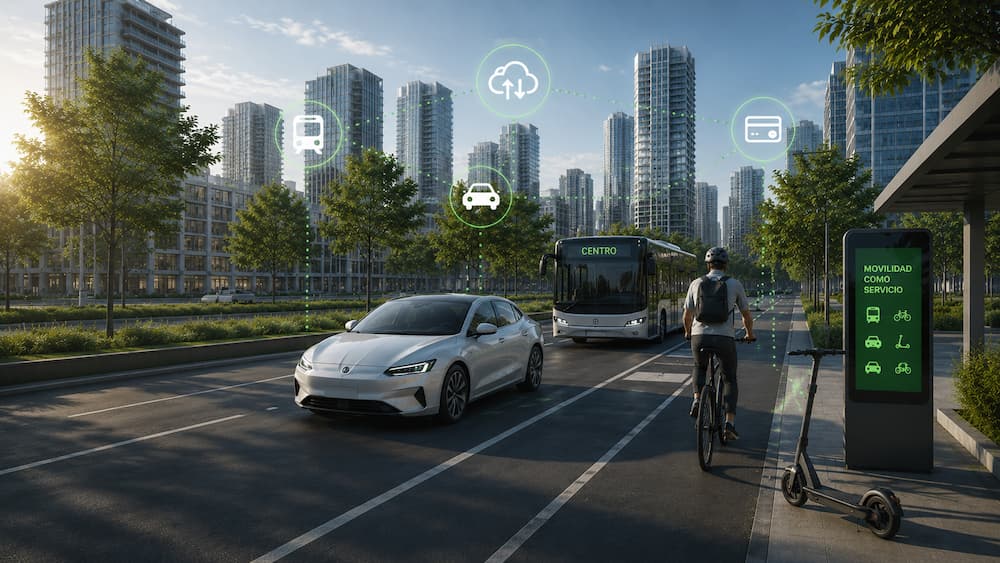
Real-time parking data: how it improves mobility
Real-time parking data helps answer practical questions: how many spaces remain, whether vehicles are waiting to enter and whether an incident is disrupting circulation.
Access systems, sensors, payment machines and booking platforms can provide live updates. Operators can use them to manage daily activity. Connected mobility platforms may also benefit. The data must be accurate and up to date.
What is real-time data in mobility?
Information may originate from access systems, occupancy sensors, payment machines, booking services or management applications.
When a vehicle enters, an access record can change the count and, where suitable integrations exist, update a guidance sign.
Real-time data updates while a car park is operating, usually after a short delay. For example, a vehicle entry can update the occupancy count and an availability sign.
Real-time does not always mean instantaneous. Update frequency depends on the equipment, communications and configuration. Check the time of the latest update.
What data can a car park provide in real time?
| Data | Meaning | Application |
|---|---|---|
| Occupancy | Vehicles currently present | Monitor capacity use |
| Available spaces | Capacity accessible to a user group | Display availability |
| Entries and exits | Recorded vehicle movements | Identify demand peaks |
| Access device status | Connected barriers and terminals | Detect incidents |
| Bookings | Committed capacity | Avoid offering reserved spaces |
| Payment status | Confirmed transactions and stays | Manage operations |
Information is available only where the installed systems collect it and can share it.
Turning parking data into useful information
1. Capture events
Sensors detect occupancy, cameras identify movements and systems record bookings and payments.
2. Update the system
Events travel through compatible communications to the relevant software or controller.
3. Validate information
Check timestamps, device identities, missing or duplicate events and consistency with configured capacity.
4. Visualise and communicate
Display verified information on dashboards, signs and compatible external services.
5. Make decisions
Use the information to manage traffic, investigate problems or improve procedures. Data still needs human or system decisions.
How real-time data helps car park management
Know availability before entry
Appropriately refreshed counts can show whether spaces are available. Reservations and restricted spaces must be taken into account.
Improve internal circulation
Guidance signs linked to occupancy information help direct vehicles to areas with available spaces.
Detect operational incidents
Records and device status can identify communication issues or unexpected access activity, enabling investigation.
Coordinate several facilities
A common platform can show information from multiple connected car parks where integrations exist.
What does real-time parking data contribute to smart mobility?
Inform drivers about availability
Displays or applications may direct drivers towards suitable facilities, although actual traffic effects must be measured.
Support city management decisions
Aggregated occupancy and movements can help authorities understand parking use alongside other transport evidence.
Improve communication during demand peaks
Connected information can help communicate changing availability during events or exceptional traffic.
Real example: availability information at Baqueira Beret
At Baqueira Beret, i+d3 technology includes parking access systems and availability displays. The project shows how information can help drivers navigate a facility with busy periods and demanding weather conditions.
See the Baqueira Beret case study.
What affects real-time data reliability?
Recorded versus actual occupancy
Missing movements, incorrect counting and unclosed stays can make the calculated figure differ from reality.
Update delays
Information can become stale when devices or applications refresh at different intervals.
Reservations and restricted spaces
Physically empty spaces may be committed to bookings or particular user groups.
Communication problems
Disconnected devices can stop providing current states. Distinguish stale readings from confirmed availability.
Data protection
Vehicle number plates may be personal data. Collect, share and retain only information necessary for the legitimate use.
What real-time metrics should operators monitor?
Operators should distinguish reliable current measurements from information which has not been refreshed due to a device or connection failure.
Metrics should be selected to answer concrete operational questions, not simply because a system can display them.
| Indicator | Use |
|---|---|
| Current occupancy | Understand facility load |
| Available capacity by zone | Direct vehicles appropriately |
| Entry/exit rate | Detect concentrated activity |
| Device connectivity | Check status of reporting systems |
| Last update time | Assess whether information is current |
| Access incidents | Coordinate response |
Choose indicators based on site needs rather than displaying every available data point.
Real-time, historical and predictive data are different
Real-time monitoring describes the current situation; historical analysis reveals past patterns; predictive analysis estimates future demand. An occupancy dashboard is not automatically an AI forecasting system.
Frequently asked questions about real-time parking data
What information can a car park provide?
Occupancy, access movements, availability and selected device or transaction status, depending on integrations.
Can real-time data identify every free space?
Only if the installation has suitable individual space detection; entry and exit counts usually show aggregate occupancy.
Can data be shared with external apps?
Yes, where compatible interfaces, permissions and suitable agreements exist.
Is real-time data the same as AI?
No. Current information can be collected and displayed without AI.
Can parking data reduce congestion?
It may support decisions and information services, but traffic reductions require measurement rather than assumption.
Does every car park need individual sensors?
No. Some need only aggregate counts; others benefit from space-level detection.
From parking information to more connected mobility
Parking information can help authorities and mobility providers coordinate services, but its usefulness depends on system compatibility and appropriate sharing arrangements.
Availability information should be interpreted alongside reserved capacity and the restrictions applying to each user group.
Accurate, current information can improve operations and support urban mobility services when systems are integrated. At i+d3 we develop connected parking technology for access, occupancy and management. Want to make parking information more useful? Contact our team to review your installation.