How to prevent fraud and revenue losses in small car parks
Fraud and cash discrepancies at small car parks can go unnoticed when entries, exits and payments are handled manually. Without reliable stay records, owners may struggle to account for every vehicle. They may also find it harder to match revenue with actual use.
Fortunately, improving control does not always require a complex system or major investment.
Automated access, payment records and remote monitoring can reduce risks. They also help owners spot unusual activity and see how their car park operates.
Here is how to detect potential revenue losses and which solutions can help prevent them.
Why do small car parks lose revenue?
Small car parks with manual processes often rely on staff to record vehicles, calculate tariffs and collect payments.
This does not mean fraud is taking place. It means mistakes and unusual transactions can be harder to find without separate checks.
Situations that can cause revenue discrepancies include:
- Unrecorded stays: vehicles entering or leaving without the operation being properly logged.
- Payments without corresponding records: money received without a link to a verifiable parking stay or transaction.
- Billing errors: incorrect tariffs, discounts or stay durations.
- Exits without payment: vehicles leaving without settling the applicable charge.
- Incidents and manual overrides: changes, cancellations or exceptional gate openings without sufficient traceability.
The main problem is the absence of information needed to compare vehicle movements with financial transactions.
How to detect possible fraud and cash discrepancies
Before buying equipment, examine how access is recorded, how payments are managed and what information owners can review.
Make sure every parking stay is recorded
One important measure is linking vehicle entries and exits to the corresponding payment records.
For example, if 20 stays have ended, the operator should be able to identify what happened to each: paid, subscriber use, discounted or outstanding because of an incident.
A mismatch between stays and payments does not prove fraud. Good records help managers find the cause and spot errors.
Identify operations requiring review
In addition to comparing access and payments, monitor indicators such as:
- Completed stays without recorded payment.
- Discounts, cancellations or exceptional gate openings.
- Differences between recorded revenue and cash closing totals.
- Manual changes to amounts or stay durations.
- Recurring incidents affecting particular equipment or shifts.
Regular review helps identify patterns, correct operating failures and strengthen internal processes without automatically suspecting employees or customers.
Technology that helps prevent revenue losses
Automation can record operations that previously depended on manual notes.
At small facilities, the priority should be adding only the features needed to monitor activity and revenue.
Automatic access control with number plate recognition
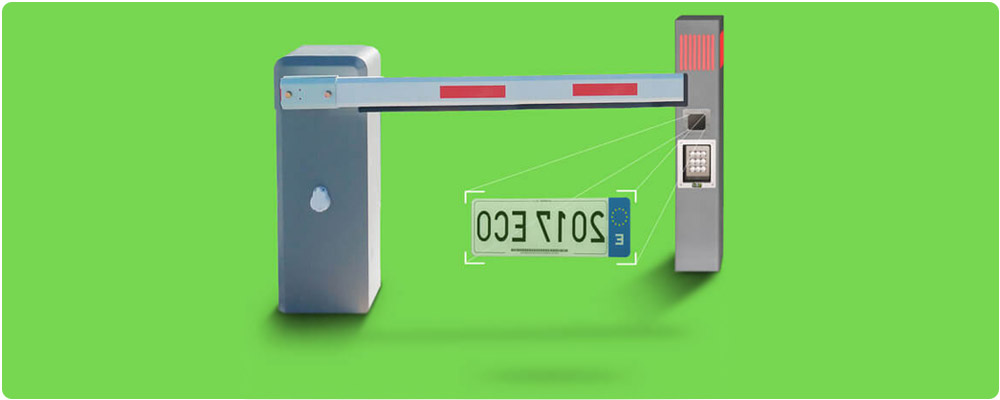
Licence plate recognition (LPR) systems identify vehicles and connect entries and exits to recorded parking stays.
At a correctly configured facility, the process may work as follows:
- A camera identifies the number plate as a vehicle enters.
- The system records entry and starts tracking the stay.
- The charge is calculated from the duration and configured tariffs.
- The customer pays through an available channel.
- The exit is recorded and linked to the corresponding stay.
This traceability reduces reliance on manual records and makes it easier to verify which vehicles have used the car park.
Recognition errors or technical problems can still occur, so exception-handling procedures are essential.
Payment systems linked to parking stays
Digital payments are another important element of improving financial controls.
When parking payment and collection systems are connected to stay management, reviewing transactions, applying tariffs and investigating discrepancies becomes easier.
Depending on the facility, options can include:
- Payments handled by staff at a control point.
- Automatic payment machines or self-service terminals.
- Payments by mobile phone.
The choice depends on vehicle numbers, opening hours and the need for on-site assistance.
Online supervision and remote parking management
A connected management system allows owners to review car park information without being physically on site.
Depending on subscribed features, they can monitor access, stays, revenue, occupancy and incidents through an online platform.
This is particularly valuable when the owner is not permanently on site or oversees several businesses.
Centralised car park management also makes it easier to compare operations and identify situations that need investigation.

How to improve control at a small car park without major investment
Infrastructure costs are often one of the biggest obstacles to modernising smaller facilities.
But not every business needs full payment machines, several automated lanes or advanced occupancy systems.
The key is selecting technology proportional to car park activity.
Consider these steps:
- Analyse current operations. Review how entries, exits and payments are controlled and where information might be lost.
- Prioritise needs. Determine whether the main problem is vehicle recording, payment collection or facility supervision.
- Review existing equipment. Check what can remain in use and what needs upgrading or integration.
- Choose a modular system. Add useful features without buying devices that do not improve operations.
- Establish regular controls. Compare stays, payments and incidents to monitor system performance.
Depending on the facility, a solution may combine LPR cameras, access control, staffed or digital payments and a monitoring dashboard without replicating the infrastructure of a large car park.
Security and data protection matter too
Preventing losses also means managing access to parking information correctly.
Set different staff permissions, identify operations requiring authorisation and retain the records needed to review incidents.
When cameras or number plate recognition systems are used, applicable data protection requirements must also be considered, including informing users, restricting access to records and retaining them only as long as justified.
The Spanish Data Protection Agency explains requirements relating to CCTV systems.
The aim is to balance transaction traceability, facility security and respect for user privacy.
Frequently asked questions about preventing parking fraud
Can an automated system eliminate fraud completely?
No system guarantees the total elimination of fraud. Automating access, linking stays to payments and recording operations can nevertheless reduce risks and make irregularities easier to identify.
Are number plate recognition cameras necessary?
Not always. It depends on operations and identification methods. Number plate recognition is one option for automating records, but ticket-based and digital-credential systems also exist.
Can a small car park be monitored remotely?
Yes. Online management may enable remote monitoring of activity, payments and incidents, depending on system configuration and contracted services.
How can I tell whether my car park is losing revenue?
Start by comparing entries and exits with paid stays, authorised exceptions and cash closing totals. This reconciliation helps flag discrepancies requiring further investigation.
More control and transparency in parking operations
Preventing revenue losses is about more than installing barriers or cameras. Reliable information is needed to understand each stay and check that charges are collected correctly.
At i+d3, we develop parking hardware and software combining access control, payment management and online monitoring according to each facility's requirements.
Want better control without investing in unnecessary equipment? Explore our parking access and payment solutions and see which options fit your business.