


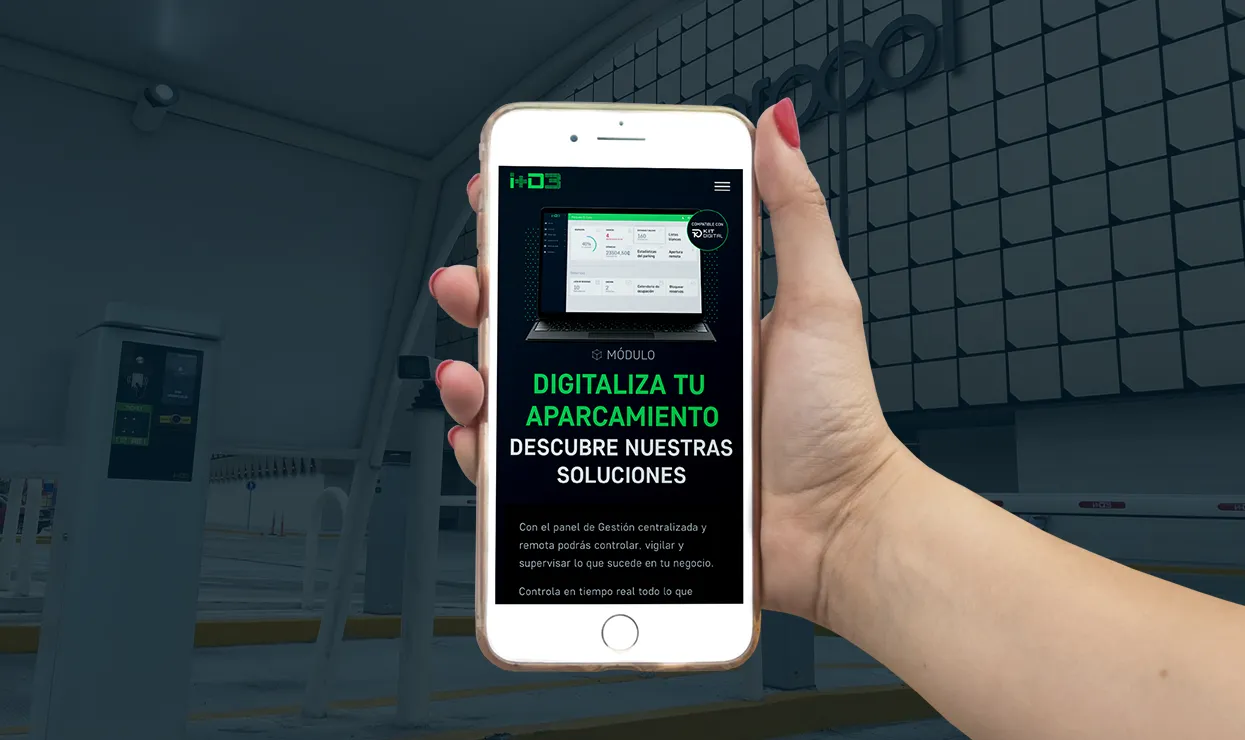
What should you digitalise first in a car park? A practical guide
Digitalising a car park does not mean replacing every machine or turning it into an unattended facility. Often the first step is connecting existing systems, simplifying work and offering customers additional digital services.
A car park can keep its barriers, payment machines and paper tickets. It may still add online management, bookings or mobile payments if its existing systems are compatible.
The question is which processes should be digitalised first and which can remain unchanged.
This guide shows where to start, what to check and how to avoid unnecessary costs.
What does it mean to digitalise a car park?
Parking digitalisation involves introducing technology to manage operations, information and services in a connected way.
It can cover recording parking stays, managing subscriptions, checking payments, offering online bookings and enabling mobile payments.
The scope depends on the facility's requirements.
For example, a car park may digitalise subscription sales without changing its entrances. Another might introduce an online management dashboard while retaining traditional equipment.
Digitalisation therefore does not necessarily involve automating every process.
The differences between digitalisation, automation, ticketless and unattended parking
These concepts are related but have different meanings.
| Concept | Meaning | Example |
|---|---|---|
| Digitalisation | Connecting processes and managing information with digital tools | Managing subscriptions and bookings online |
| Automation | Performing operations without routine manual intervention | Opening a barrier when an authorised number plate is recognised |
| Ticketless | Identifying parking stays without depending on paper tickets | Entry using number plate recognition |
| Unattended parking | Operating without permanent on-site staff | Self-service access and payments with remote assistance |
Facilities may combine several of these approaches or use only some of them.
The key is choosing what meets their real requirements.
Which parking processes should be digitalised first?
There is no single correct order for every car park.
Priorities depend on labour-intensive tasks, customer difficulties and the possibility of reusing existing infrastructure.
Administration and subscription management
If staff spend hours registering subscribers, renewing passes or managing permissions, digital tools can make these tasks easier.
Centralised information also makes it easier to review the permissions and conditions associated with each customer.
This may be a useful starting point for car parks serving a high proportion of recurring customers.
Payments and collection
A facility with automatic payment machines may consider additional channels, including mobile payment.
The aim need not be removing physical equipment, but providing alternatives suited to customer preferences.
Feasibility depends on how parking stays are identified and payment systems communicate.
Online bookings and sales
Facilities selling spaces or subscriptions can add tools that let drivers review conditions and book services before arrival.
Bookings must be coordinated with availability, tariffs and access procedures.
Online sales need proper operational integration to prevent availability and authorisation errors.
Monitoring and information management
When access, parking-stay and payment information is spread across different tools, centralisation can help management teams.
The level of monitoring depends on connected systems and their available features.
This is especially useful for multi-site operators or businesses where administrative duties are shared.
Access and user identification
Digitalisation may also introduce number plate recognition, QR codes and other compatible credentials.
However, changing the entry method is not always the priority.
If existing barriers and tickets work reliably, it may be better to begin with administrative, sales or payment processes.
How to prioritise digitalisation according to parking needs
| Current situation | Digitalisation opportunity | What to check first |
|---|---|---|
| Manual registrations and renewals | Digital subscription management | Customer records, tariffs and permissions |
| Payments only accepted on site | Add digital payment channels | Stay identification and payment integration |
| Bookings handled by phone | Online reservations and sales | Availability, quotas and access rules |
| Information spread across systems | Centralise management | Communication between equipment and platforms |
| Frequent manual validation | Digitalise permissions and authorisations | Credentials and access conditions |
| Working equipment operating in isolation | Integrate digital services | Manufacturer interfaces and compatibility |
This comparison highlights opportunities but cannot replace a technical assessment.
Even an apparently simple improvement may require additional development if the equipment lacks the necessary interfaces.
Can you digitalise a car park without replacing equipment?
Yes. Some facilities can introduce digital services while retaining part of their existing equipment.
For example, operators can explore integrations between their parking software and management, booking or payment platforms.
Compatibility must however be checked before deciding on a solution.
What to review in existing equipment
Barriers and terminals. Check their condition, operation and ability to communicate with other systems.
Management software. Understand how customers, tariffs, stays and transactions are recorded.
Integration interfaces. APIs or technical documentation may help connect external platforms.
Communications. Online services need suitable connectivity and contingency procedures for outages.
Manufacturer support. Integration may depend on cooperation from the current equipment supplier.
What if the equipment is incompatible?
Additional components, custom integration or replacement of particular devices may be required.
Decisions should consider cost, reliability and the functionality needed.
Retaining an old machine may not make sense if adapting it is excessively complicated.
Equally, replacing reliable equipment that can be integrated at a reasonable cost may be unnecessary.
How to decide what to digitalise before investing
A practical way to prioritise improvements is to assess them from three perspectives.
Operational impact
What problem will the change solve?
Possibilities include reducing administrative work, adding a payment method or coordinating facility managers.
Ease of integration
What changes are required?
Adding a digital tool compatible with existing infrastructure can be very different from a project involving replacement of equipment and communications.
Cost and maintenance
What are the investment and recurring costs?
Beyond implementation, consider service fees, integrations, support and maintenance.
The highest-priority improvement is not necessarily the most advanced technology, but the one that provides clear value with proportionate effort.
Real-world example: integrating parking management with Froiz checkout tills
Supermarket car parks show how digitalisation can address specific needs.
For Froiz, i+d3 developed solutions connecting parking operations with supermarket checkout systems.
Using 3Park2Go integration, staff can perform tasks on checkout devices, such as validating tickets or managing parking status.
This allows parking-related tasks to be handled from another customer service point inside the store.
Some sites also use parking guidance systems.
The project demonstrates that digitalisation is about connecting previously separate processes, not merely installing new machinery.
Read more in the Froiz case study.
Common mistakes when digitalising a car park
Introducing tools without defining the problem
More features do not automatically mean better management.
Before adding services, decide how they will be used and who will be responsible.
Assuming all equipment can be integrated
Available APIs, supplier conditions and technical requirements can limit connections.
Verify compatibility before committing investment.
Digitalising only the driver experience
A booking app or website may be useful to customers, but it must also work with internal operations.
Unsynchronised data can result in booking, access or payment problems.
Removing existing processes too soon
During a technology transition, alternative channels may be needed to serve some customers or handle incidents.
Digitalisation must suit real operating requirements.
How to determine whether digitalisation is delivering value
After introducing a new tool, evaluate whether it has achieved its intended purpose.
Useful indicators include:
- Time spent on administrative tasks.
- Percentage of payments through each channel.
- Online reservations and subscriptions.
- Operations requiring manual intervention.
- Incidents related to integrations.
- System maintenance costs.
Not everything needs measuring.
Choose indicators directly linked to the original problem and compare outcomes before and after deployment.
Frequently asked questions about parking digitalisation
Must all equipment be replaced to digitalise a car park?
Not always. Some devices can be retained if compatible with new services. A technical assessment should confirm feasibility.
Can a car park with paper tickets offer digital services?
Yes. Depending on the installed system, conventional tickets can coexist with online bookings, digital management or payment services.
Does digitalising a car park mean removing staff?
No. Technology can simplify tasks and connect processes without changing the on-site service model.
Can a car park start with reservations or mobile payments?
Yes, provided compatibility with tariffs, availability, stay identification and other required systems is verified.
What is the difference between digitalising and modernising a car park?
Digitalisation focuses on connected processes, data and services. Modernisation is broader and may include replacing machinery, new infrastructure or physical improvements.
Which improvement should come first?
That depends on the facility. Begin with the process causing the biggest difficulties and where digitalisation can deliver measurable benefits.
Digitalise what your car park actually needs
Parking digital transformation does not have to happen all at once.
Start with customer administration, payments or reservations, assess the outcome and then consider further improvements.
The goal is a connected, coherent operation adapted to the facility while reusing existing resources wherever practical.
At i+d3, we develop parking digitalisation solutions combining software, equipment and services tailored to each project.
Want to know which processes you could digitalise? Contact our team to review your facility and its integration options.


